Key takeaway:
- THCA is a non-intoxicating cannabinoid found in raw hemp that converts to THC when heated.
- Federal and state rules on hemp-derived THCA products vary and continue to shift.
- Product testing, lab reports, and label transparency are the clearest ways to verify what a hemp product actually contains.
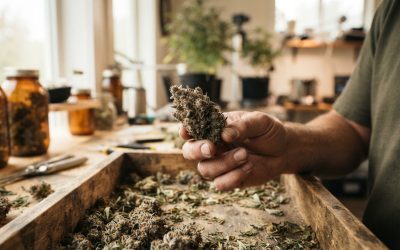
THCA, or tetrahydrocannabinolic acid, is the acidic precursor to THC that occurs naturally in raw hemp before heat converts it into the compound associated with intoxicating effects. In its unheated form, THCA does not produce the same psychoactive response as THC, though that changes once the product is smoked, vaped, or otherwise heated through a process called decarboxylation.
Shoppers who want to explore Hemp products with Luminate often start by trying to understand this distinction, since THCA flower and concentrates are frequently marketed as federally compliant hemp items while still producing THC-like effects once activated. That gap between raw chemical structure and heated effect is central to how these products are regulated and sold.
How THCA Differs From THC
The chemical difference between THCA and THC comes down to a single carboxyl group that is removed during decarboxylation.
- THCA: found in raw or dried hemp, minimally intoxicating on its own.
- THC: formed after heat is applied, associated with the psychoactive effects commonly linked to cannabis.
- Lab testing: distinguishes between “total THC” and “THC” to account for this conversion, which matters for determining whether a product legally qualifies as hemp.
This distinction is why a product can test under the legal THC threshold in its raw state yet still convert to a substantial amount of THC once smoked or vaporized.
Legal Status and Why It Keeps Shifting
Hemp-derived cannabinoids, including THCA, fall under a regulatory framework shaped by the 2018 Farm Bill, which defined legal hemp as cannabis containing no more than 0.3 percent delta-9 THC on a dry-weight basis. The U.S. Department of Agriculture oversees hemp production standards under this definition, and its hemp program guidance outlines how THC content is measured and verified at the federal level.
Because that 0.3 percent threshold is typically measured before decarboxylation, raw THCA flower can often meet the legal definition of hemp even though it converts to THC levels well above that threshold once heated. Some states have moved to close this gap by testing for “total THC,” which combines THCA and THC into a single calculated figure, while others continue to apply the narrower federal standard. This inconsistency means legal status for THCA products can differ depending on where a consumer is located, so checking current state rules remains a practical step before purchasing.
What Affects the Experience
Several factors shape how a hemp-derived THCA product behaves once consumed, and these vary by format and preparation method.
- Heating method – Smoking or vaping activates THCA into THC almost immediately, while eating raw hemp material does not produce the same conversion.
- Potency and sourcing – THCA percentage on a lab report reflects raw content, not the eventual THC yield after heating.
- Individual tolerance – Body weight, prior cannabinoid exposure, and metabolism all influence how a converted product is felt.
- Product format – Flower, concentrates, and pre-rolls convert differently depending on surface area and burn temperature.
| Product Form | Typical Use | Conversion to THC |
|---|---|---|
| Raw THCA flower (unheated) | Reference only, not typically consumed raw | Minimal |
| Smoked or vaped THCA flower | Inhalation | High, near-complete |
| THCA concentrate | Dabbing or vaporizing | High, near-complete |
| THCA in edibles (decarbed) | Oral consumption | Depends on prior processing |
Reading Lab Reports and Labels
A certificate of analysis (COA) from an independent lab is the most direct way to verify what a hemp product contains before and after heating.
- Confirm the COA lists both “THCA” and “Total THC,” not just one figure.
- Check the testing date and batch number against the product packaging.
- Look for screening of contaminants such as pesticides, heavy metals, and residual solvents alongside cannabinoid content.
Businesses operating in the USA that sell hemp-derived THCA products are expected to maintain this documentation for each batch, and consumers can typically request it directly or find it posted alongside product listings.
Frequently Asked Questions
Is THCA legal everywhere hemp is legal? Not necessarily. Federal hemp law sets a 0.3 percent delta-9 THC limit measured before heating, but some states separately regulate THCA or apply a “total THC” calculation that can change a product’s legal status.
Does THCA show up on a drug test? Because THCA converts to THC when heated and metabolized, use of THCA products can result in a positive drug test for THC, even though the raw compound itself is not intoxicating.
How is THCA different from CBD? CBD does not convert into an intoxicating compound when heated, while THCA converts into THC. Both originate from hemp or cannabis plants but follow distinct chemical pathways.
Can THCA products vary significantly between brands? Yes. Potency, conversion rates, and contaminant screening can differ widely, which is why checking a current lab report for each specific batch is more reliable than relying on packaging claims alone.
Business Info
Hemp product information and current offerings for Luminate are listed through its online business profile.
Current product listings for Luminate are published for reference by consumers researching hemp-derived options.