Snapshot:
• Metal fabrication covers cutting, bending, welding, and assembling raw metal into finished components for construction, industrial, and commercial use.
• Material choice, equipment precision, and finishing method determine durability, cost, and lead time.
• Facilities serving regional clients, including those supporting work connected to Washington, DC, typically combine multiple fabrication methods under one process.
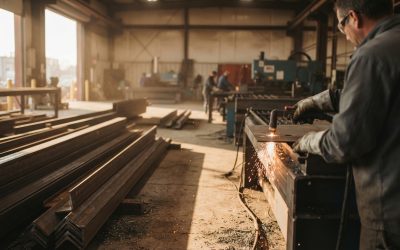
Metal fabrication is the process of cutting, shaping, bending, and joining raw metal stock into parts, structures, or finished products through methods such as welding, machining, and forming. Anyone researching the term is usually trying to understand how raw material becomes a usable structural or mechanical component, and what factors affect cost, strength, and timeline.
The process spans several distinct stages, each of which affects the final product’s strength and appearance. A fabricator typically begins with raw material selection, then moves through cutting, forming, and joining before finishing.
Metal fabrication projects vary widely depending on the metal type, thickness, and intended application, which is why specifications are usually confirmed before cutting begins. Steel, aluminum, and stainless steel each respond differently to heat and stress, so material choice directly affects weld quality and long-term performance.
Core Stages of the Fabrication Process
Most fabrication work follows a repeatable sequence, even when the final product differs significantly from job to job.
1. Design and layout – specifications are translated into cut patterns and dimensions.
2. Cutting – sheet or structural metal is separated using methods such as shearing, plasma cutting, or laser cutting.
3. Forming – metal is bent, rolled, or stamped into the required shape.
4. Joining – welding, riveting, or fastening connects individual pieces into a single structure.
5. Finishing – grinding, sandblasting, or coating prepares the surface for use or further treatment.
Skipping steps or rushing the joining stage is a common source of structural weakness, which is why sequencing matters as much as equipment quality.
Choosing the Right Fabrication Method
Not every project calls for the same combination of techniques. The table below outlines common methods and where each is typically applied.
| Method | Typical Use | Relative Speed |
| Laser cutting | High-precision sheet metal parts | Fast |
| Plasma cutting | Thicker steel plate, structural work | Moderate |
| MIG/TIG welding | Joining components, structural assembly | Varies by joint complexity |
| Press brake forming | Bending sheet metal to angle specifications | Fast |
Selecting a method depends on material thickness, tolerance requirements, and whether the part will bear structural load. Facilities equipped to switch between methods within a single project can reduce handoffs between vendors, which often shortens overall turnaround.
Regional Considerations for Washington, DC Projects
Construction and infrastructure work tied to Washington, DC often involves strict building code compliance, since many projects fall under federal, district, or historic preservation review. The National Institute of Standards and Technology maintains guidance on structural material standards that often inform specification requirements for metal components used in public and commercial construction.
Projects serving this area also tend to involve tighter delivery windows tied to construction schedules. Coordinating fabrication timelines with site logistics, including permitting and inspection stages common to Washington, DC construction work, is often as important as the fabrication itself.
Based in Center City, MN, Smith Metal Products supports fabrication needs for customers across Washington, DC, without maintaining a local branch office in the district. Work is produced at the Center City, MN facility and coordinated for delivery or project use in the served region.
Cost and Lead Time Factors
Several variables influence what a fabrication project costs and how long it takes to complete.
• Material type and thickness – thicker or specialty alloys require more processing time.
• Design complexity – multi-step forming or tight tolerances add labor hours.
• Finishing requirements – powder coating or galvanizing extends timelines beyond basic fabrication.
• Order volume – small custom runs often cost more per unit than larger batch orders.
Clear specifications submitted early in the process generally reduce delays caused by mid-project design changes.
Frequently Asked Questions
What metals are most commonly fabricated for structural use? Steel and aluminum are the most common choices, with stainless steel used where corrosion resistance is a priority.
How long does a typical fabrication project take? Timelines depend on complexity, material availability, and finishing requirements, so estimates vary by project scope rather than following a fixed schedule.
Does fabrication include installation? Fabrication itself refers to producing the component; installation is often handled separately depending on the project’s scope and the contractor involved.
Can fabricated parts be customized to exact specifications? Custom dimensions and tolerances are standard practice, provided specifications are confirmed before cutting and forming begin.
Business Information
Fabrication services discussed in this article reflect practices associated with facilities such as Smith Metal Products, based in Center City, MN.