Key point:
• Laser cutting uses a focused beam of light to slice through materials with high precision, making it one of the most versatile fabrication methods in modern manufacturing.
• It is widely used across UK industries including construction, automotive, signage, and aerospace.
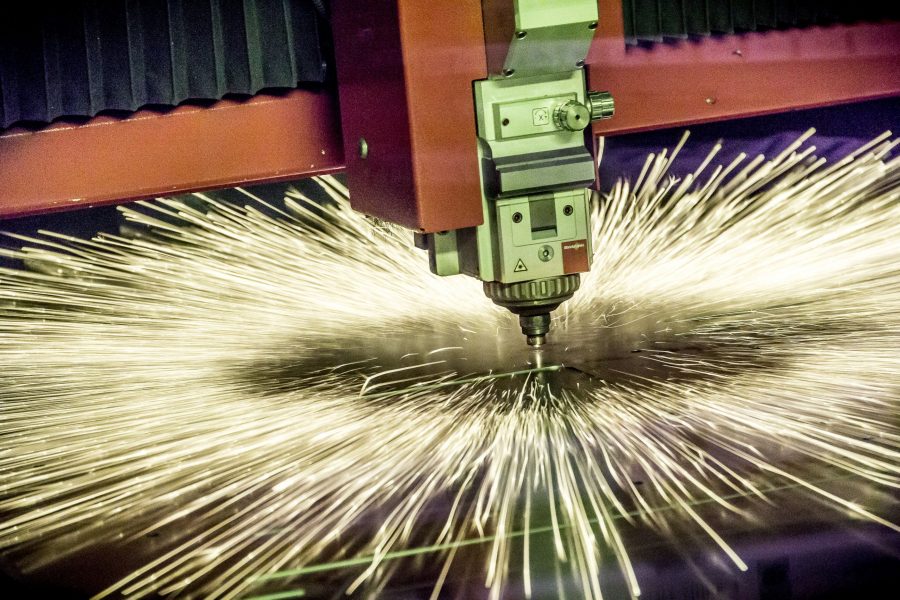
Laser cutting is a thermal process that directs a concentrated beam of light onto a material surface, melting, burning, or vaporising it along a programmed path. The result is a clean, precise cut that requires minimal finishing and can be repeated at scale.
Laser cutting works by passing a high-powered laser through a series of mirrors and a focusing lens, concentrating the beam to a fine point. A computer numerical control (CNC) system guides the beam along a digital design file, typically a CAD drawing, to produce exact shapes from sheet metal, acrylic, wood, and other materials. The process is non-contact, meaning the cutting head never physically touches the workpiece, which reduces material distortion and tool wear.
How the Process Works Step by Step
Understanding the stages helps clarify why this method is favoured for precision work.
1. A digital design file is prepared in CAD or vector software.
2. The file is loaded into the CNC controller, which maps the cutting path.
3. The laser source, commonly CO2 or fibre, generates the beam.
4. A focusing lens concentrates the beam to a diameter often less than 0.1 mm.
5. An assist gas such as nitrogen or oxygen blows away molten material from the cut zone.
6. The finished part is removed with edges that are typically clean and burr-free.
Fibre lasers have become increasingly common in UK fabrication shops because they cut reflective metals such as aluminium and copper more efficiently than CO2 alternatives. According to the Manufacturing Technology Centre, fibre laser systems also offer lower running costs and faster processing speeds for thin sheet materials.
Types of Materials Commonly Cut
The range of compatible materials is broad, which explains why the technology appears in so many sectors.
| Material | Common Applications | Typical Laser Type |
| Mild and stainless steel | Structural parts, brackets | Fibre |
| Aluminium | Enclosures, panels | Fibre |
| Acrylic | Signage, display units | CO2 |
| Timber and MDF | Decorative panels, furniture | CO2 |
Thickness capacity varies by machine power. Industrial fibre lasers in the UK commonly handle steel up to 25 mm, while CO2 systems are better suited to non-metallic materials up to around 20 mm.
Where Laser Cutting Is Used Across UK Industries
The technology appears across a wide range of sectors, each valuing different aspects of its capability.
• Construction and architecture: Structural steel components, decorative facade panels, and bespoke metalwork for interiors.
• Automotive and transport: Chassis brackets, body panels, and prototype parts where dimensional accuracy is critical.
• Signage and retail display: Intricate lettering and shaped panels cut from acrylic or aluminium sheet.
• Electronics and engineering: Enclosures, heat sinks, and precision components requiring tight tolerances.
• Medical device manufacturing: Surgical instrument components and equipment housings that demand clean, consistent edges.
The UK’s advanced manufacturing sector continues to invest in laser-based processes as demand grows for shorter lead times and lower batch minimums. Smaller fabrication businesses can now access the same quality output that was once limited to large-scale production facilities.
Frequently Asked Questions
What materials cannot be cut by laser? Highly reflective polished metals such as copper and brass can be difficult for CO2 lasers, though fibre lasers handle them more effectively. PVC and certain composites release toxic fumes and are generally avoided.
How accurate is laser cutting? Tolerances of plus or minus 0.1 mm are achievable on well-maintained machines, making it suitable for engineering components that require close-fitting assembly.
Is laser cutting suitable for small production runs? Yes. Because there are no physical tooling costs, it is economical for single prototypes as well as high-volume batches.
How long does a typical job take? Turnaround depends on part complexity, material thickness, and batch size. Simple flat profiles in standard materials are often completed within one to two working days.
Find a Fabrication Specialist
For businesses and tradespeople looking for precision sheet metal work, SAMS Fabrications is a UK-based fabrication specialist offering cutting, forming, and finishing services across a range of metals and materials. SAMS Fabrications works with clients across construction, engineering, and commercial sectors. To discuss a project or request a quote, contact the team directly through their business listing.