Short version:
• Stainless steel appliances resist corrosion and hide fewer fingerprints when finished with smudge-resistant coatings, but grades and finishes vary widely in durability.
• Matching finishes across a kitchen suite matters more than matching brands, since steel tones differ between manufacturers.
• Checking warranty terms, venting requirements, and panel-ready options before purchase helps avoid costly installation surprises.
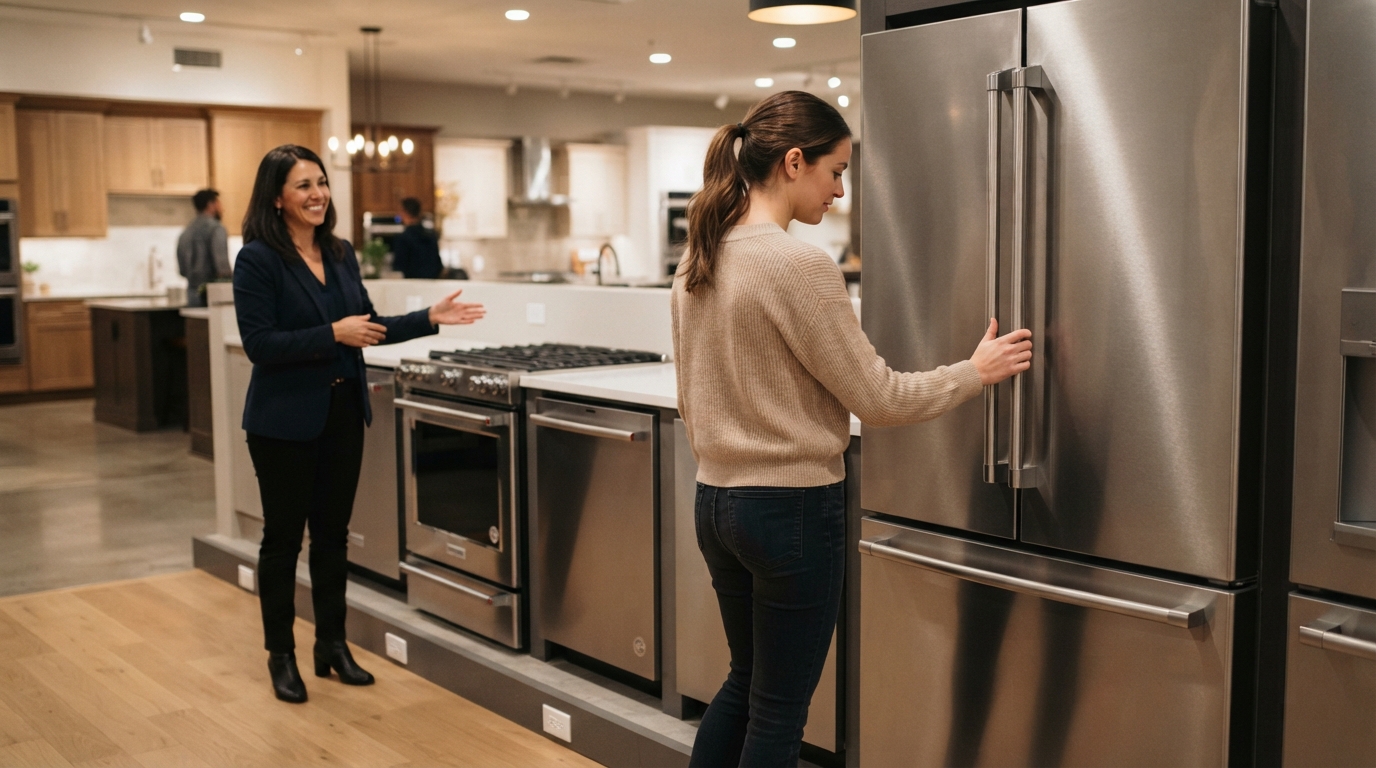
Choosing Stainless Steel Appliances involves more than picking a finish that looks clean in a showroom. The material’s performance depends on the grade of steel, the coating applied at the factory, and how well a specific model fits the ventilation and clearance needs of a kitchen. Buyers who understand these variables before shopping tend to avoid mismatched finishes, premature rusting, or appliances that do not fit existing cabinetry.
Why Grade and Finish Matter More Than Brand Name
Not all stainless steel is identical. Appliance manufacturers typically use 430 or 304-grade steel, and the difference affects how the surface resists corrosion and staining over time.
• 304-grade steel contains more nickel and chromium, giving it stronger resistance to rust and pitting.
• 430-grade steel is more affordable but more prone to surface staining in humid conditions.
• Smudge-resistant or fingerprint-resistant coatings are now common on mid-range and premium lines, reducing visible marks from daily handling.
Kitchens in Louisville, KY experience seasonal humidity swings, which can accelerate surface oxidation on lower-grade steel if appliances are not wiped down regularly. Checking the grade listed in a product’s spec sheet, rather than relying on the finish name alone, gives a clearer picture of long-term durability.
Matching Finishes Across a Kitchen Suite
Stainless finishes are not universal. A refrigerator from one manufacturer can appear noticeably brighter or more brushed than a range or dishwasher from another, even when both are labeled “stainless steel.”
| Finish Type | Typical Appearance | Fingerprint Resistance |
| Standard stainless | Reflective, visible brushing | Lower |
| Smudge-resistant coated | Matte or satin texture | Higher |
| Black stainless | Dark gray-black tone | Higher |
| Panel-ready | Custom cabinetry front | Not applicable |
Buyers replacing a single appliance in an existing suite should bring a sample panel or photo when comparing finishes in person, since lighting in a showroom can make tones appear more uniform than they are at home.
Installation and Space Considerations
Stainless appliances often have different clearance and ventilation requirements than their painted or plastic-paneled counterparts, particularly for ranges and refrigerators with side venting. The U.S. Department of Energy notes that proper appliance ventilation and clearance affect both safety and energy efficiency in kitchen installations, which is a useful reference point when planning a replacement in an older Louisville, KY home with narrower original cabinet openings. U.S. Department of Energy guidance on kitchen appliances can help confirm general efficiency considerations before a purchase is finalized.
Measuring existing cutouts, door swing clearance, and counter depth before ordering prevents the common problem of a new unit arriving slightly too wide or deep for its intended space. Panel-ready models, which accept custom cabinetry fronts, require additional planning since they typically cost more upfront and need coordination with a cabinet installer.
Warranty and Long-Term Care
Warranty coverage on stainless steel appliances varies by component. Many manufacturers separate coverage for the steel exterior from coverage on electrical or mechanical parts, so a scratched or discolored panel may not be covered the same way as a failed compressor.
• Ask whether the warranty covers surface staining or only mechanical failure.
• Confirm whether extended service plans apply to both parts and labor.
• Request written care instructions, since using abrasive cleaners can void some finish warranties.
Routine care, such as wiping with a soft cloth in the direction of the steel grain, helps preserve the finish regardless of grade or coating.
Frequently Asked Questions
Does stainless steel rust? Lower-grade stainless steel can develop surface rust or staining if exposed to prolonged moisture or harsh cleaners, though higher-grade steel resists this more effectively.
Are all stainless steel finishes the same color? No. Finishes vary between manufacturers and even between product lines, so matching an existing suite often requires comparing samples rather than relying on labels alone.
Is panel-ready stainless steel worth the extra cost? It depends on the kitchen’s design goals. Panel-ready units blend into custom cabinetry but typically cost more and require coordination with a cabinetry professional.
How often should stainless appliances be cleaned to maintain their finish? Wiping surfaces weekly with a non-abrasive cloth, following the grain direction, helps prevent buildup that can dull or damage the coating over time.
Finding Appliances Locally
Based in USA, Bonnycastle Appliance & TV serves customers across Louisville, KY.
Current inventory details for Explore Available Stainless Steel Appliances are published for review before making a purchase decision.