Short version:
• Teppanyaki cooking combines tableside grilling on a flat iron griddle with knife skills, timing, and showmanship performed in front of diners.
• Hibachi-style dinners typically bundle protein, vegetables, rice, and sides into one shared tableside experience.
• A Teppanyaki Restaurant depends on trained chefs, a flat-top grill station, and a dining layout built around group seating.
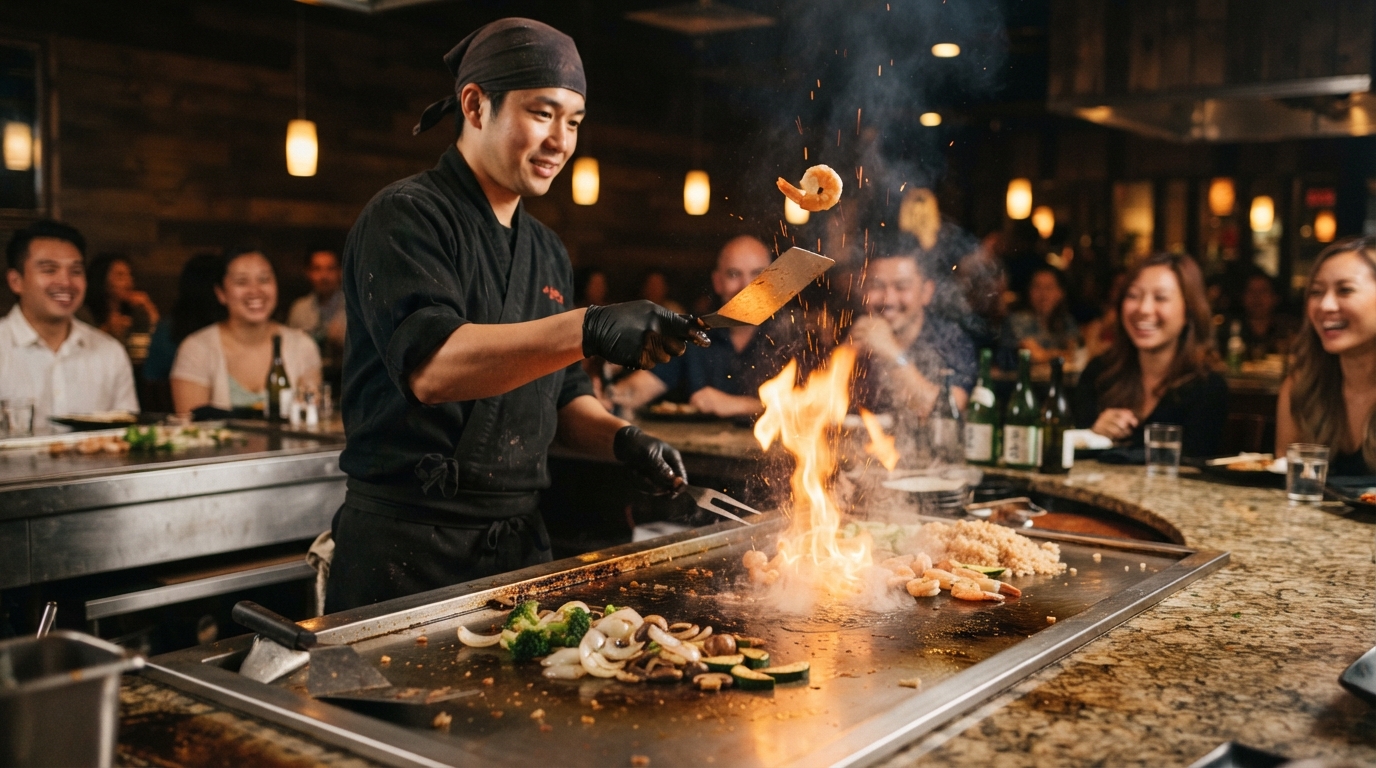
A teppanyaki restaurant prepares food on a flat iron griddle directly in front of guests, turning meal preparation into a visible performance rather than a back-of-house process. The format pairs practical cooking technique with tricks like utensil spins, onion volcanoes, and synchronized chopping, which is why it has remained a popular choice for group dinners and celebrations.
Choosing a Teppanyaki Restaurant usually means more than picking a meal; it means selecting an experience built around shared tables, live cooking, and a set sequence of courses. House of Kobe – Merrillville is one example of this format operating in the region, with hibachi dinners that bundle a shrimp appetizer, soup, salad, vegetables, rice or noodles, and dessert into a single tableside meal.
What Happens at the Grill Table
Teppanyaki service follows a fairly consistent structure, even though menus vary by restaurant.
• A chef preps raw ingredients tableside, often starting with vegetables before moving to proteins.
• Seasoning, sauces, and oil are added directly on the flat-top during cooking, not afterward.
• Portions are divided and plated in view of the table rather than in a kitchen.
• Entertainment elements, such as stacking onion rings into a flaming tower or flipping shrimp into a hat, are worked into natural pauses in cooking.
Menus at this style of restaurant commonly list combination entrees such as filet mignon with shrimp, chicken with scallop, or seafood trios, reflecting how entrees include shrimp appetizers, soup, salad, vegetables, white rice, and ice cream, with fried rice offered separately.
Why the Format Works for Groups and Special Occasions
Hibachi-style seating places multiple parties around one grill table, which naturally encourages group bookings for birthdays, anniversaries, and work gatherings. The shared-table layout also means wait times and course pacing are tied to the chef’s cooking sequence rather than individual kitchen tickets.
Reviewers of hibachi and teppanyaki spots frequently point to portion size as a reason the format suits groups, since steak and shrimp dinners often produce more food than a single diner can finish, stretching into two or three meals. That volume, combined with the communal grill setup, makes teppanyaki dining a practical fit for parties that want one shared experience instead of separate orders.
Kitchen Safety Behind the Show
The same open flame and hot griddle that make teppanyaki visually engaging also carry real workplace hazards. Federal guidance on commercial cooking notes that grilling surfaces should stay clean and free from grease accumulations that might ignite and cause a fire, a standard that applies directly to high-heat flat-top cooking performed in front of guests. The same OSHA guidance also warns that workers in hot kitchen environments face strain and sprain risks from prolonged standing and repetitive reaching while cooking on a hot grill surface, which is relevant given how long a hibachi chef stands at one station during a single seating.
Business Info
Based in Merrillville, IN, House of Kobe – Merrillville serves diners from Crown Point, IN who are looking for tableside hibachi and teppanyaki dining. The restaurant’s menu centers on deluxe hibachi entrees, with combinations such as filet mignon and lobster or chicken and scallop prepared on the grill at the table, alongside sushi options for guests who prefer a lighter start to the meal.
Frequently Asked Questions
Is teppanyaki the same as hibachi? The terms are often used interchangeably in the United States, though traditional hibachi refers to a charcoal brazier while teppanyaki describes cooking on a flat iron griddle. Most American restaurants that advertise hibachi dinners are actually using teppanyaki-style flat-top grills.
What should first-time diners expect at the grill table? Guests are typically seated around a shared flat-top with other parties, and a chef prepares the meal in courses, starting with vegetables and moving through protein and rice. Expect some interactive moments, such as the chef tossing food or performing small tricks between cooking steps.
Are teppanyaki dinners suitable for large groups? Yes, the shared-table format and bundled course structure make this style practical for parties celebrating birthdays or other occasions. Portion sizes at many hibachi dinners are generous enough that groups often have leftovers to split.
Does teppanyaki cooking carry any safety considerations for kitchen staff? Flat-top grilling involves sustained high heat, open flame, and repetitive motion, all of which are addressed in federal workplace safety guidance for commercial kitchens. Restaurants are expected to maintain clean grill surfaces and train staff on burn and fire prevention.
A Note on Finding Local Options
Current listings and service area information for House of Kobe – Merrillville are published online for diners researching hibachi and teppanyaki dining nearby.